
Identification
Signs of a Wasp Nest 12 Warning Signs Explained
You rarely see the nest itself before you notice the signs of one. Wasp nests are almost always hidden — tucked inside roof voids, behind fascia boards, in wall cavities, underground, or deep inside a garden shed. What you see first is the activity around the nest.
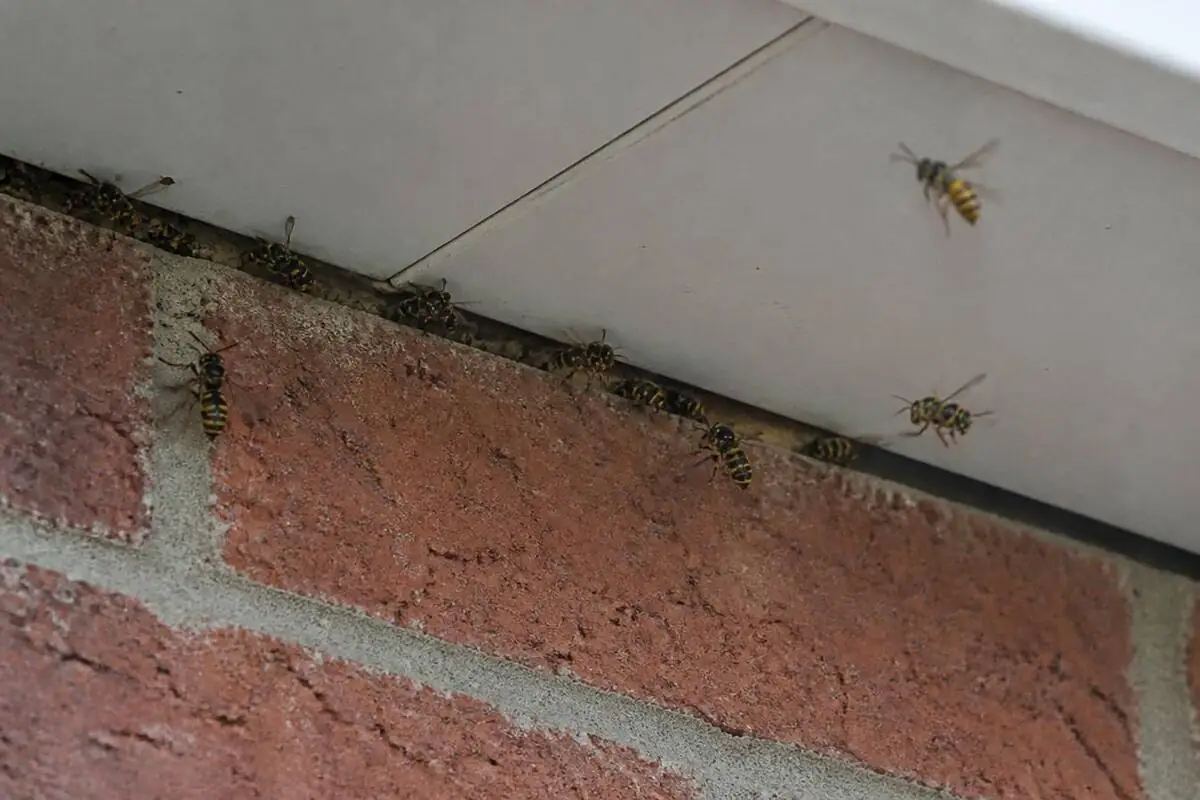
This guide explains exactly what to look for, where to look for it, and how to distinguish a wasp nest from a bee colony, a hornet nest, or just a concentration of wasps feeding nearby.
The 12 signs of a wasp nest
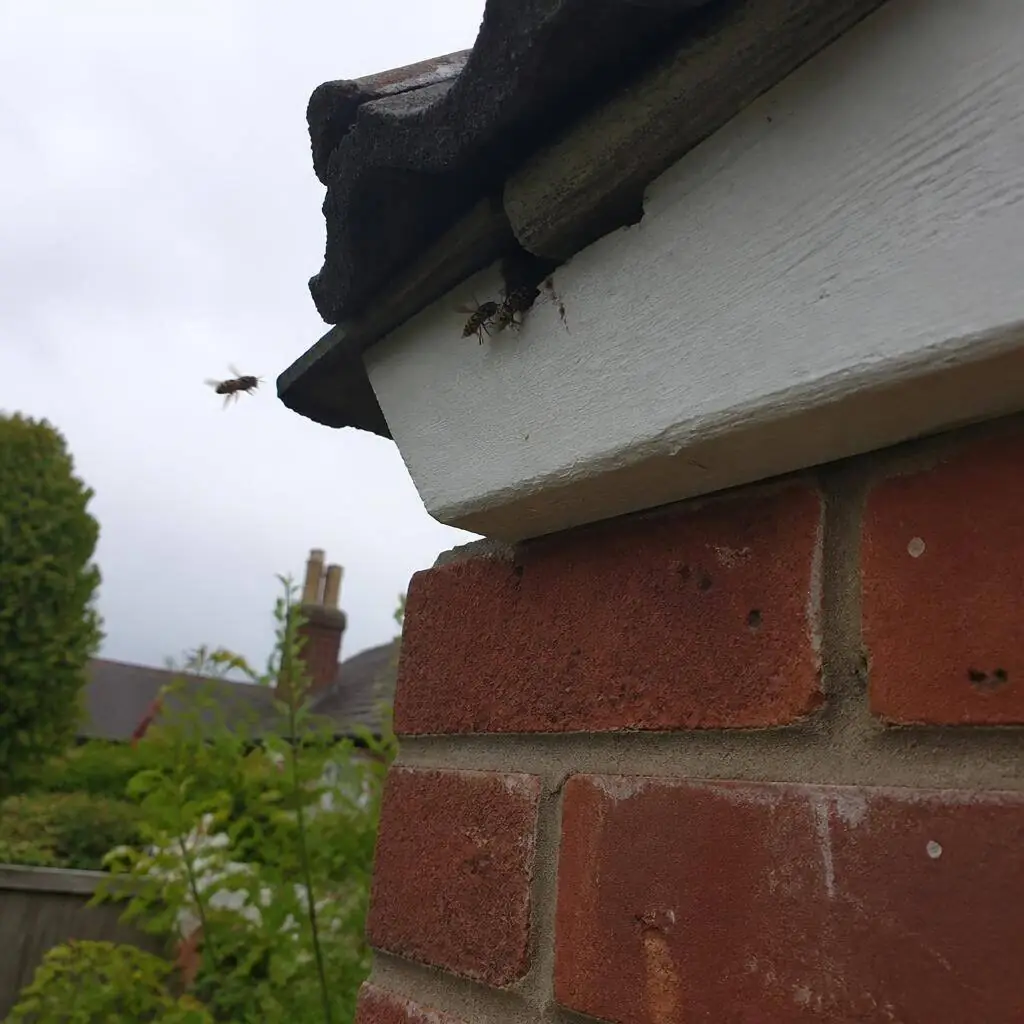
| Sign | What to look for |
|---|---|
| 1. Wasps entering a fixed point at roofline level | The single most reliable sign of a nest in a loft or roof void. You will see wasps flying in a purposeful pattern to and from one specific gap — typically in mortar between roof tiles, a gap at the fascia-and-wall junction, or under a soffit. They are not hovering or exploring; they are commuting. |
| 2. Visible wasp nest material in an eaves gap | Sometimes the grey-brown papery material of an early-stage nest is visible at the entrance gap. More common with fresh nests in June and July. Do not attempt to block the gap while wasps are present. |
| 3. Dark staining or marks on a ceiling or wall | In lofts, a large nest generates enough moisture to cause damp staining on ceiling plasterboard. If you notice an unexplained damp patch in summer, check for wasp activity at the roofline above. |
| 4. Audible buzzing in ceilings or walls | A large established nest produces a constant low hum that can be heard through walls and ceilings. If you can hear buzzing with no visible entry point, call us — we can locate it from outside. |
| 5. Wasps entering a hole in the ground | Ground-nesting wasps are common across Hertfordshire, particularly in gardens with sandy or loose soil. Steady stream of wasps flying at low level into a small hole in the lawn or under paving. Never block the hole or pour anything in. |
| 6. Heavy wasp activity around a shed or outbuilding | If your garden shed suddenly seems full of wasps, or you see wasps flying in and out of a gap in the cladding or roof, the nest is almost certainly inside the shed roof space or behind the cladding. |
| 7. A visible papery nest under eaves or in a tree | Free-hanging papery nests look like a grey-brown paper lantern, starting golf-ball sized in early summer and growing to football-sized or larger by August. Do not approach or touch. |
| 8. Wasps repeatedly entering a wall cavity | Entry through an air brick, gap around a pipe, or loose mortar joint is common in older Hertfordshire properties. Entry point is smaller and less obvious than a roofline gap, but the same purposeful flight pattern is visible. |
| 9. Sudden increase in wasp numbers in one area | If one part of your garden or one room is consistently attracting far more wasps than the rest, investigate whether there is a nest within 50 metres. Wasps may be foraging from a nest next door or in a nearby tree. |
| 10. Wasps in your loft when you investigate | If you go into your loft and find live wasps, do not stay — leave immediately and close the hatch. The nest may not be visible from where you enter, but if there are wasps in the loft, the nest is there. |
| 11. Live wasps indoors with no obvious way in | Wasps appearing inside a room repeatedly, particularly in the evening, can indicate a nest inside the wall or ceiling void. They find their way through light fittings, ventilation gaps, or small cracks. |
| 12. Chewed wood or pulp material near ceiling edges | Wasps chew wood to make their nest material. Fine wood-dust-like debris from this process can fall through light fitting gaps or around loft hatch edges — a subtle sign that building is underway. |
When do wasp nests appear in Hertfordshire?
Understanding the seasonal cycle helps you know when to start looking and when to act.
| Period | What's happening |
|---|---|
| February – March | Mated queens emerge from hibernation. They prospect for nest sites alone. Nests are tiny — just a few cells. Queens are solitary and not aggressive. |
| April – May | Most early-season wasp reports are actually bumblebees, masonry bees, or mortar bees. These are harmless and should not be treated. |
| June | First genuine worker wasp activity. Small but established colonies. This is the ideal time to treat — the nest is most accessible and the colony is smallest. |
| July – August | Peak season. Nests can contain thousands of workers. Entry points obvious from volume of traffic. This is when we receive the majority of our call-outs. |
| September | Colonies begin to break down. Worker wasps become erratic and aggressive as they lose their purposeful role. September is the most dangerous month for unprovoked stings. |
| October onwards | Cold temperatures cause the colony to die off. The queen hibernates. The physical nest will not be reused next year. |
Is it a wasp nest, a bee colony, or a hornet nest?
One of the most common calls we receive is from homeowners who are convinced they have wasps but actually have bees — or vice versa. Here is how to tell from the outside, without getting close.
| Clue | Wasps | Bumblebees | Honeybees | European Hornets |
|---|---|---|---|---|
| Body appearance | Smooth, hairless, bright yellow and black | Fat, very fluffy, golden stripes | Smaller than wasp, hairy, more brown than yellow | Large, brown and orange, smooth |
| Entry point | Single gap in structure, purposeful entry | Low to ground, loose soil, often under shed base | Wall cavity, chimney, roof void | Hollow tree, loft, bird box |
| Volume at entry | 5-20+ wasps per minute in peak season | 1-3 bees at a time | Constant stream, heavier than wasps | Lower volume than wasps, more lumbering |
| Night activity | None | None | None | Active at night, attracted to lights |
| When active | May – October | March – August | March – October | May – October |
What to do when you find a wasp nest
- Do not approach it, touch it, or attempt to block the entry. Even a small nest will defend itself aggressively if disturbed.
- Observe from a safe distance. Note the exact location of the entry point — a photograph from distance is helpful.
- Identify whether it is wasps or bees. Use the table above or call us and describe what you are seeing.
- Call 01727 789571 or 0800 046 3473. We will give you a guaranteed price at the time of booking and book the earliest available appointment — usually the same day.
- Do not attempt DIY treatment. Shop-bought wasp sprays are significantly weaker than the professional-grade products we use and frequently fail. A failed DIY treatment agitates the colony and makes subsequent treatment harder.
Related: species identification guide · hornets · prevention.
Found a nest?
Same-day nest treatment in your town
Confirmed a nest at your property? Pick your town below for local postcodes, travel times and same-day availability.
- Wasp nest removal Barnet(EN5, N20)
- Wasp nest removal St Albans(AL1–AL4)
- Wasp nest removal Watford(WD17–WD25)
- Wasp nest removal Hemel Hempstead(HP1–HP3)
- Wasp nest removal Harpenden(AL5)
- Wasp nest removal Hertford(SG13, SG14)
- Wasp nest removal Stevenage(SG1, SG2)
- Wasp nest removal Hitchin(SG4, SG5)
- Wasp nest removal Welwyn Garden City(AL7, AL8)
- Wasp nest removal Hatfield(AL9, AL10)
- Wasp nest removal Rickmansworth(WD3)
- Wasp nest removal Borehamwood(WD6)
- Wasp nest removal Bushey(WD23)