
from £99
Wasp Nest Removal & Treatment — Watford
Insecticide powder goes in at the entry point and the colony is usually inactive within 2–3 hours. Same day across WD17, WD18, WD19, WD24, WD25.
Watford · WD17, WD18, WD19, WD24, WD25
Local wasp and hornet pest control across WD17, WD18, WD19, WD24, WD25. Family-run, based in St Albans AL3, reaching Watford in approximately 30-40 minutes. Fixed price from £99, fully licensed, free revisit guarantee. Call 01923 428978 — same day WhatsApp for a fast quoteFreephone 0800 046 3473Lines open 8am–9pm, 7 days a week · No call-out charge · Free revisit guarantee

Verified Google reviews
Live customer feedback, updated automatically as new reviews come in.
Seen a nest? Same-day treatment, price confirmed on the phone.
01 — Our Services
Wasps and hornets are all we deal with.
Insecticide powder goes in at the entry point and the colony is usually inactive within 2–3 hours. Same day across WD17, WD18, WD19, WD24, WD25.
European hornet nests, same method and same price. Not sure which you have? Describe it on the phone.
Call 01923 428978. From our St Albans base we typically reach central Watford in 30-40 minutes. Holywell, Nascot Wood and South Oxhey in 35-45 minutes. Garston and Leavesden in 40-50 minutes.
Shops, offices, schools, care homes and rented property, treated discreetly.
We don't treat honey bees. Swarms are passed to a local beekeeper.
Deep roof voids, cavity walls and listed buildings, with no invasive work.
Wasp nest removal in Watford covers WD17 to WD25, from West Watford's Victorian terraces to Holywell, Nascot Wood and Garston. We identify the nest's entry point before treating roofline, soffit, chimney or garden nests. Homes near Cassiobury Park and the River Gade also need their lawns, borders and outbuildings checked. Call the Watford number, 01923 428978, to discuss access and confirm your booking price.
Not sure it's a nest? Check the signs of a wasp nest. Thinking of a DIY wasp nest removal? Read what happens if you leave a wasp nest and our wasp nest in the roof guide first.
02 — Local Knowledge
Watford has one of the most diverse housing stocks in Hertfordshire — ranging from Victorian terraces in West Watford to 1930s semis in Holywell and Nascot Wood, post-war estates in South Oxhey, and modern town centre apartments. This diversity means virtually every type of wasp nest scenario we encounter across Hertfordshire appears somewhere in Watford.
Streets across West Watford produce the highest volume of loft and chimney nests in WD17/WD18. Original Victorian rooflines, lime-pointed walls, and intact chimney stacks provide the gaps queen wasps spend spring searching for. Properties on the leafier streets near Cassiobury Park have an additional risk factor — the park's woodland edge sustains a high overwintering queen population.
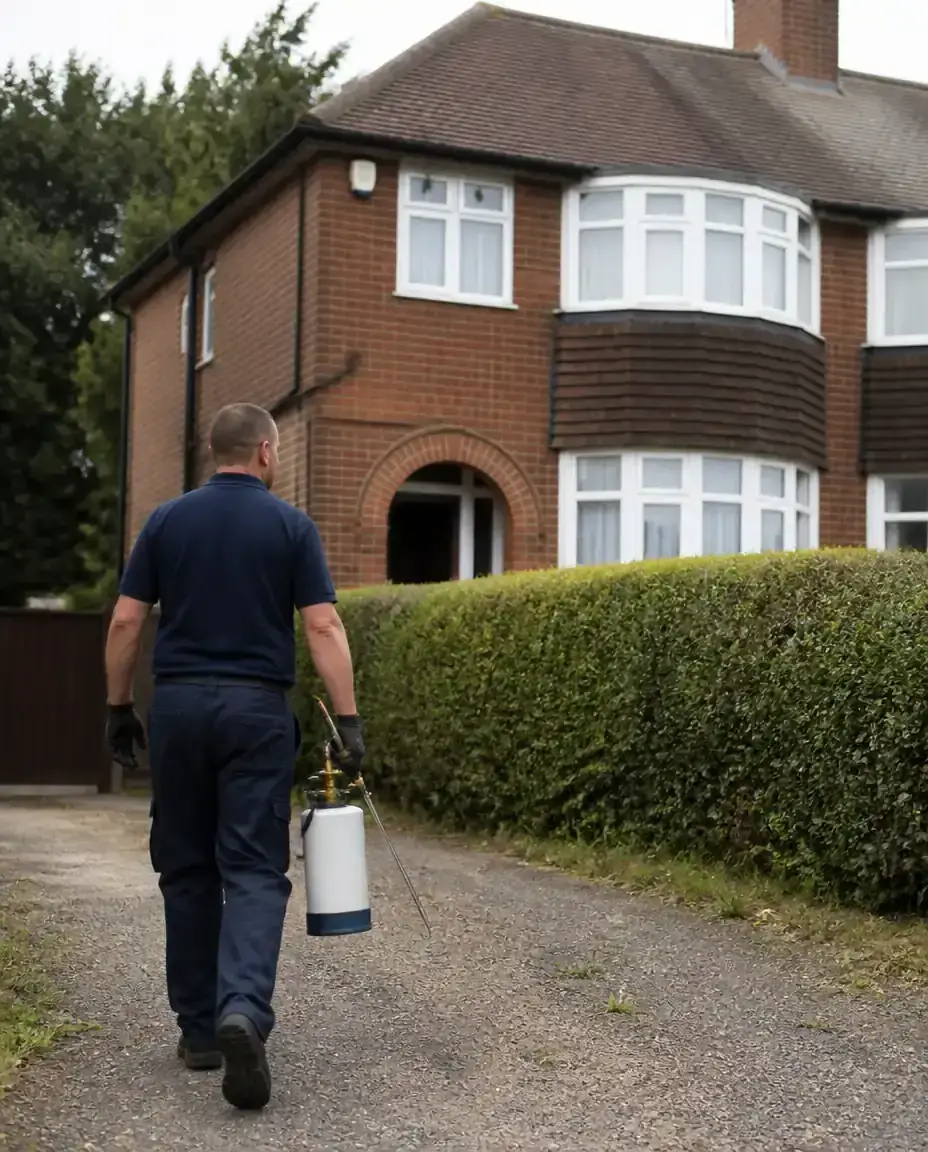
The interwar semis of Holywell and Nascot Wood generate consistent soffit and fascia nest call-outs. Boxed-in soffits typical of this era can hide a substantial colony behind a narrow board, and the boxed flat-roof junctions over bay windows are a particular hot spot.
The post-war estates of South Oxhey and Woodside in WD19 generate regular wall cavity and soffit nest call-outs on the original construction. Carpenders Park's mature gardens also produce ground nests through the season.
North Watford has a varied mix including modern builds alongside older stock. Newer properties still get garden, shed, decking and fence nests even where the building itself has fewer entry points.
Garston and the southern fringe of WD25 — backing onto the M25 corridor and open countryside — produce ground nests and garden building nests alongside the standard loft scenarios. Properties with larger plots and proximity to farmland or woodland have a higher than average wasp nest frequency.
03 — Where We Find Them
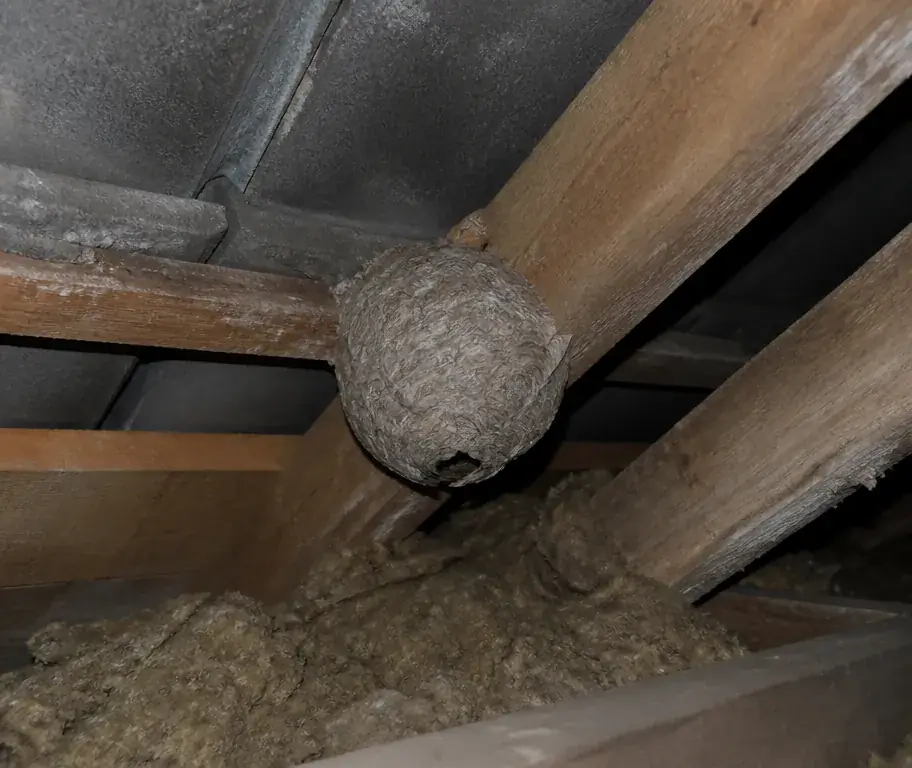
The nests we see most often in Watford:
| Nest location | What we find in Watford — and where |
|---|---|
| Loft / roof void | The most common call-out in all Watford WD postcodes. Victorian and Edwardian properties in West Watford (WD17/18) are most frequently affected. |
| Under roof tiles | Very common on the older clay tile roofs of Victorian West Watford properties. Wasps enter between or beneath tiles to access the roof void. |
| Soffits and fascia boards | Dominant on the 1930s semis of Holywell and Nascot Wood; boxed soffits frequently conceal substantial colonies. |
| Wall cavities and air bricks | Common on the post-war WD19 estates of South Oxhey and Oxhey and on older brick-built town centre properties. |
| Chimneys | Original Victorian and Edwardian stacks across West Watford. Treated via the stack — never light a fire. |
| Underground in gardens | Common in Cassiobury, Carpenders Park and the WD25 fringe near woodland and open land. |
| Sheds, outbuildings and garages | All postcodes. Carpenders Park, Leavesden and the WD25 villages with larger plots particularly prone. |
Yours not here? Call and describe it.
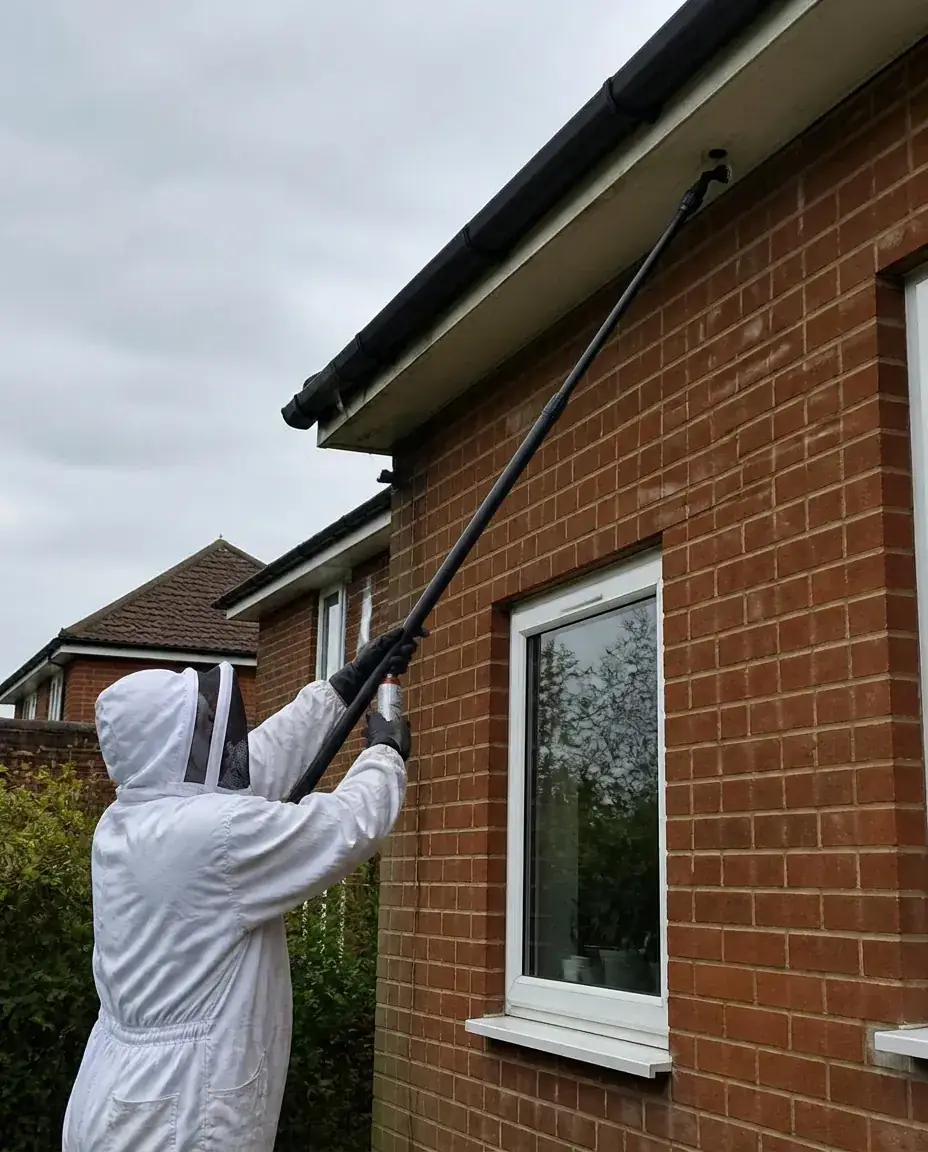
Our single highest-volume call-out type in Watford. Treated externally at the roofline gap that has been the queen's access point since spring — no need to enter the loft.
Boxed soffits on interwar semis are a classic Watford hot spot. The colony is reached through the small gap the wasps use as entry — no boards lifted.
Wasps at light fittings or the loft hatch mean a nest directly above. Don't spray indoors; it's treated at source.
Treated from outside at the roofline gap. Nothing needs clearing from the loft.
Powder goes in at the tile gap from outside. No tiles lifted.
We work out from the flight path whether it's in the soffit or the roof void, then treat the gap.
04 — Pricing
No call-out charge and no extras for awkward access. The price you're quoted on the phone is the price you pay.
05 — How It Works
We check the species, fix the price and book the earliest slot, usually the same day in Watford.
We find the entry point by watching the flight path.
Insecticide at the entry point, from outside in almost every case.
Usually inactive within 2–3 hours.
We tell you what activity to expect over the next day or so.
If your Watford nest needs a second treatment, it's free.
06 — Why Choose Us
07 — Coverage
Every street, neighbourhood and village in WD17, WD18, WD19, WD24, WD25 is within our daily service zone:
08 — When to Act
| Period | What is happening in Watford |
|---|---|
| Apr — May | Queens pick nest sites. Most sightings now are bumblebees or mortar bees, not wasps. |
| June | Colonies are small. The quickest and easiest time to treat. |
| July — August | Peak season, with thousands of workers in a big nest. Ring in the morning for a same-day visit. |
| September | The colony breaks down and workers turn aggressive. Most stings happen now. |
| Oct — Nov | The nest dies off. Seal the entry gap so it isn't reused next spring. |
Busiest spot in Watford: Cassiobury Park and the River Gade corridor — high garden-nest density every summer.
Month-by-month detail is in our Wasp Life Cycle page.
08b — Availability
| When | Availability across Watford |
|---|---|
| Phone lines | 8am–9pm, 7 days a week. |
| Appointments | Monday to Saturday, 8am until dusk. Ring in the morning for a same-day visit; evenings on request. |
| Sundays & bank holidays | Limited, mainly in peak season (June to September). Ask when you call. |
08c — Wasps or Bees?
Many spring calls from Watford turn out to be bees. Our wasp, hornet & bee species guide has photos to compare. We never treat honey bees; swarms go to a local beekeeper.
09 — FAQs
10 — Nearby Areas
Closer to one of these? Each has its own local page.
See our full Coverage Areas page for every town we cover.
Call and speak to a real person in Hertfordshire. Guaranteed price at the time of booking. Same-day service in most postcodes.