
Identification
Wasps vs Hornets UK Identification Guide
The four species you might encounter in a UK garden: common wasp, German wasp, European hornet and Asian hornet. Side-by-side comparison of size, colour, behaviour, nest type and what to do.
The four UK species — at a glance
| Species | Size | Body colour | Where you'll see it |
|---|---|---|---|
| Common wasp (Vespula vulgaris) | 12-17mm | Bright yellow & black, anchor-shaped face marking | Throughout the UK in gardens, lofts, sheds. The 'standard' wasp. |
| German wasp (Vespula germanica) | 12-17mm | Bright yellow & black, three small dots on face | Equally common as the common wasp; often indistinguishable to non-specialists. |
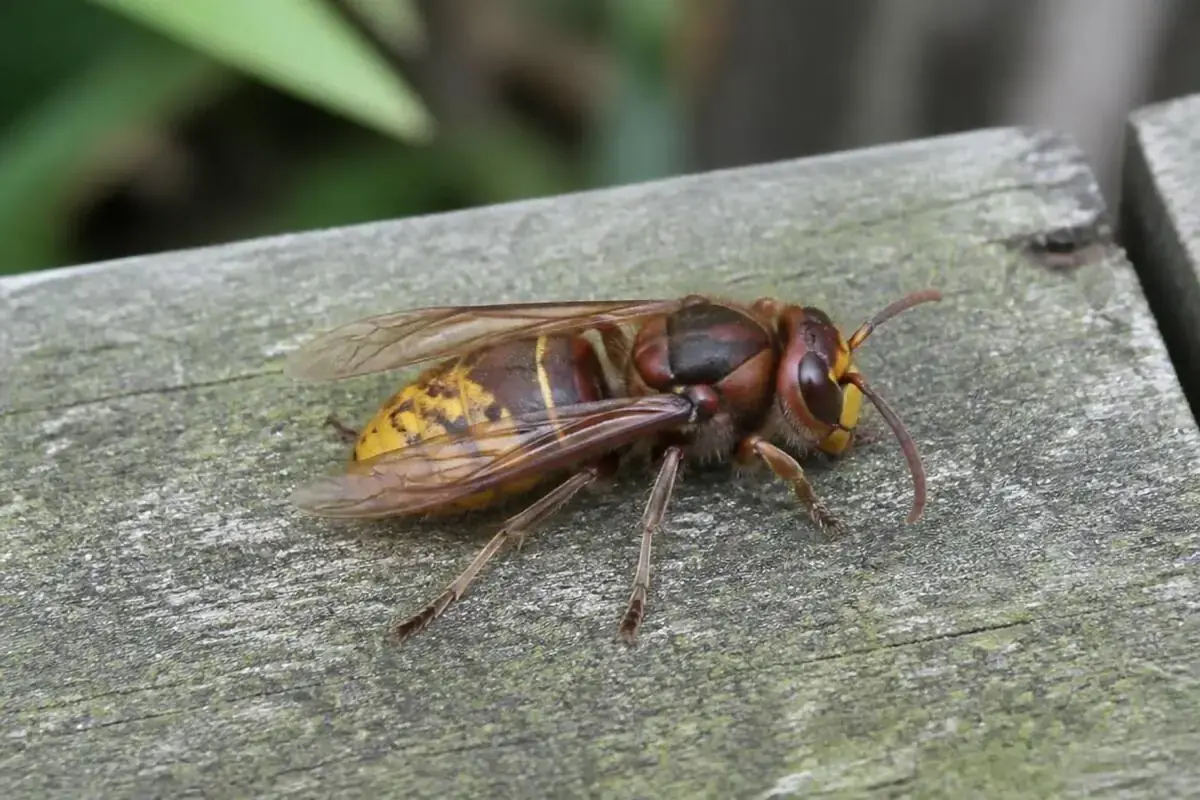
| European hornet (Vespa crabro) | 25-35mm | Yellow & chestnut-brown (no pure black) | Larger gardens, wooded areas, tree cavities, sometimes lofts. Less common in dense urban areas. |
| Asian hornet (Vespa velutina) | 20-25mm | Dark almost black; bright yellow leg tips | INVASIVE — confirmed UK sightings concentrated on south coast and East Anglia. Spreading north. |
Wasps in detail
The "wasp" most people encounter is one of two species — the common wasp (Vespula vulgaris) or the German wasp (Vespula germanica). They are almost identical in size, behaviour and nest type, distinguishable only by the markings on the face. Both are 12-17mm, yellow and black, build grey papery nests, and are increasingly aggressive in late summer when the colony shifts from raising brood to scavenging carbohydrates.
European hornets in detail
The European hornet (Vespa crabro) is the UK's largest social wasp, with workers reaching 25mm and queens up to 35mm. Crucially, they are not just "big wasps" — the colouration is distinctly different, showing a warm chestnut-brown on the thorax and at the base of the abdomen alongside the yellow. European hornets are surprisingly less defensive than common wasps and rarely attack unless the nest is directly threatened.
They are also generalist predators rather than late-season scavengers — you will not typically find a European hornet interested in your pint or your jam sandwich. They build large nests in tree cavities, outbuildings, lofts and occasionally chimneys, and the workers fly notably late into the evening, including after dark.
Asian hornets — invasive, must be reported
The Asian hornet (Vespa velutina) is smaller than the European hornet but much darker — almost entirely black with one orange band on the abdomen. The single most reliable ID feature is the bright yellow leg tips, which neither European hornets nor wasps share. Asian hornets are a serious threat to UK honey bees and confirmed sightings must be reported to the National Bee Unit via the Asian Hornet Watch app.
See the dedicated Asian hornet UK guide for identification details and how to report.
Nest comparison
| Species | Nest material & colour | Typical location | Mature size |
|---|---|---|---|
| Common wasp / German wasp | Grey paper from weathered wood | Lofts, wall cavities, soffits, sheds, underground | Football-sized; up to 5,000 workers |
| European hornet | Brown paper (uses fresher wood) | Tree cavities, outbuildings, lofts, sometimes chimneys | Larger than wasp nests; up to 700 workers |
| Asian hornet — primary nest (spring) | Light brown paper | Sheltered locations 4-6m up | Small — football-sized in spring |
| Asian hornet — secondary nest (summer/autumn) | Light brown paper | High in mature trees (10-30m up) | Very large — basketball-sized; up to 6,000 workers |
Related guides
- Asian hornet UK — identification & reporting
- European hornet — full guide
- Wasp, hornet & bee species guide
- Signs of a wasp nest
- Wasp nest removal cost