
Stings & Allergy
Wasp Stings & Allergy First Aid Guide
Most wasp stings need nothing more than ice, paracetamol and an antihistamine. A small minority need 999. This guide tells you exactly how to tell the difference — and what to do in the first 30 minutes either way.
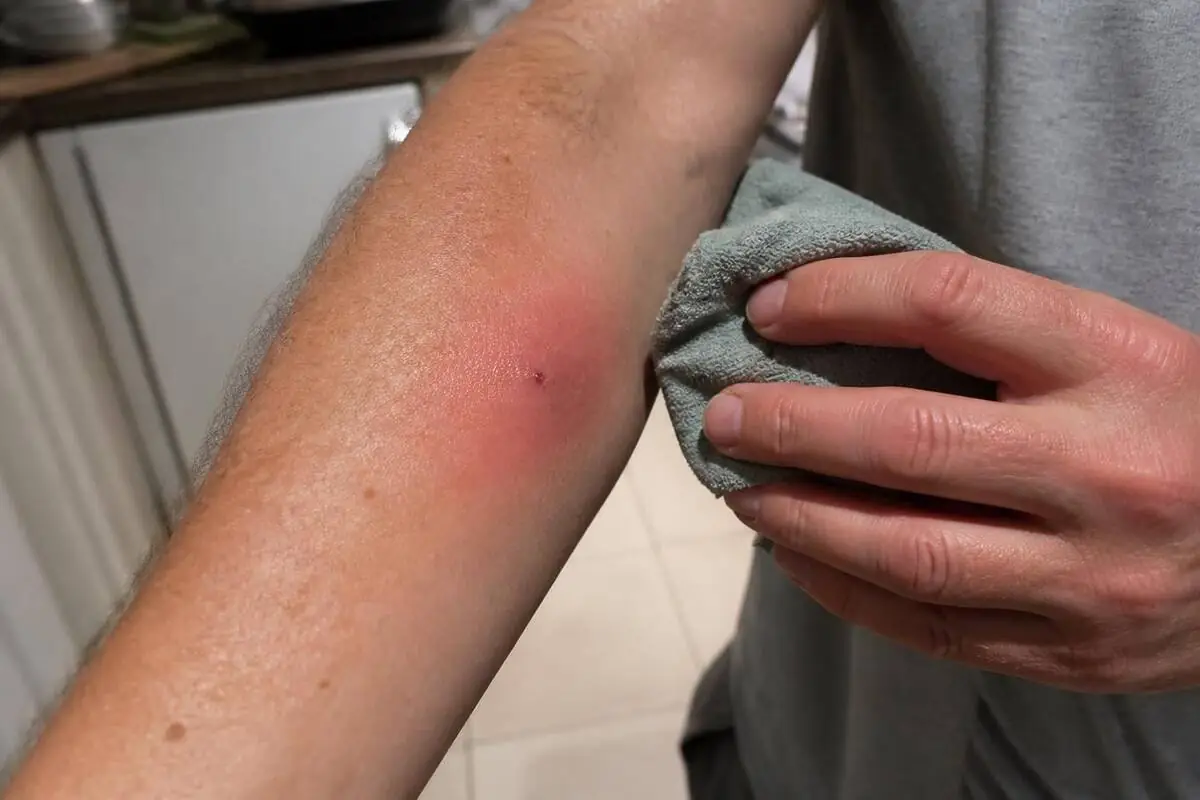
Normal reactions vs allergy — at a glance
| Reaction type | What you see | What to do |
|---|---|---|
| Normal local reaction | Sharp pain, redness and swelling up to 5cm across at the sting site. Settles over 24-48 hours. | Ice, paracetamol or ibuprofen, oral antihistamine if itchy. No medical input needed. |
| Large local reaction | Swelling more than 10cm across, may track up a limb. Lasts 3-7 days. Itchy and uncomfortable but not dangerous. | Oral antihistamine, cold compress, elevate limb. GP if it keeps spreading after 48 hours. |
| Mild systemic reaction | Hives away from the sting site, mild nausea, flushing. No breathing or circulation problems. | Antihistamine immediately. Phone 111 for advice. Do not drive yourself. |
| Anaphylaxis | Breathing difficulty, throat tightness, voice change, dizziness, collapse, widespread rash. Onset within 30 minutes. | 999 NOW. Use adrenaline auto-injector if available. Lay flat, legs raised. Do not stand up. |
| Delayed reaction (7-14 days) | Fever, joint pain, hives returning, swollen glands. | GP appointment. This is serum sickness — usually resolves with antihistamines and a short steroid course. |
What to do in the first 5 minutes
- Get away from the nest. If you've been stung once, more are likely. Walk briskly — do not run flailing — at least 10 metres away, ideally indoors.
- There is no sting to scrape out. Unlike bees, wasps do not leave a sting embedded. Don't waste time looking.
- Wash the area with cold soapy water. Removes any venom on the skin surface and reduces infection risk.
- Apply something cold. Wrapped ice, a bag of frozen peas, a cold can — for 10 minutes on, 10 off, for the first hour. Slows venom spread and reduces swelling.
- Take pain relief if needed. Paracetamol or ibuprofen at standard adult doses. Avoid ibuprofen on an empty stomach.
- Take an oral antihistamine if itchy or swollen. Cetirizine 10mg or loratadine 10mg are widely available.
- Sit down for 30 minutes and watch for systemic signs. Don't drive. If anything in the red callout above appears, dial 999.
Multiple stings — when to seek help
Wasp venom is cumulative. The lethal dose for a healthy adult is estimated at 50+ stings, but systemic toxic effects — vomiting, headache, low blood pressure, dark urine — can appear from around 10 stings upwards even with no allergy. Phone 111 for any adult with 10+ stings, or any child with 5+ stings. Multiple stings on the head, neck or inside the mouth always warrant a same-day medical assessment because of airway risk.
If you know you are allergic
Anyone with a previously confirmed wasp venom allergy should carry two in-date adrenaline auto-injectors at all times during summer and autumn, and have an up-to-date allergy management plan from an NHS allergy clinic. If you have been told you are at risk but do not yet have a referral, ask your GP about venom immunotherapy — it is highly effective and reduces future anaphylaxis risk by over 90%.
Pets and wasp stings
Dogs are stung most often on the muzzle, paws or inside the mouth after snapping at a flying wasp. Cats are typically stung on the paw or face. Single stings on the body usually need no more than a cold compress and observation for 24 hours. Stings inside the mouth, throat or that cause facial swelling are an out-of-hours vet emergency because of airway compromise. Multiple stings, any collapse, or persistent vomiting all warrant immediate vet assessment.
Preventing the next sting — practical advice
- If wasps appear at your meal, stand up slowly and move indoors. Swatting triggers defensive pheromones that bring more wasps.
- Keep drink cans covered. Wasps crawl inside and stings to the inside of the mouth are uniquely dangerous.
- Don't walk barefoot on lawns in August or September — underground nests are easy to step on.
- Check eaves, sheds and bird boxes early in summer. A nest treated in July is safer and cheaper than one in September.
- If you have confirmed venom allergy, avoid scented body products outdoors during wasp season.
If the nest causing the stings is on your property
One sting tends to mean a forager has been disturbed. Repeated stings, or seeing wasps coming and going from one spot on the house, means you have an active nest. Locate it from a safe distance, stop using that part of the garden, and call us. Most nests can be treated the same day and the colony is dead within 24 hours.
Related guides
- Our treatment process
- Signs of a wasp nest
- Underground wasp nests — highest sting risk
- Can I remove a wasp nest myself?
- UK wasp & bee species ID