
Sting Treatment
Wasp Sting Treatment The Complete Guide
Most stings are painful but harmless. For a small number of people, a sting can become a life-threatening emergency within minutes. Here is exactly what to do.
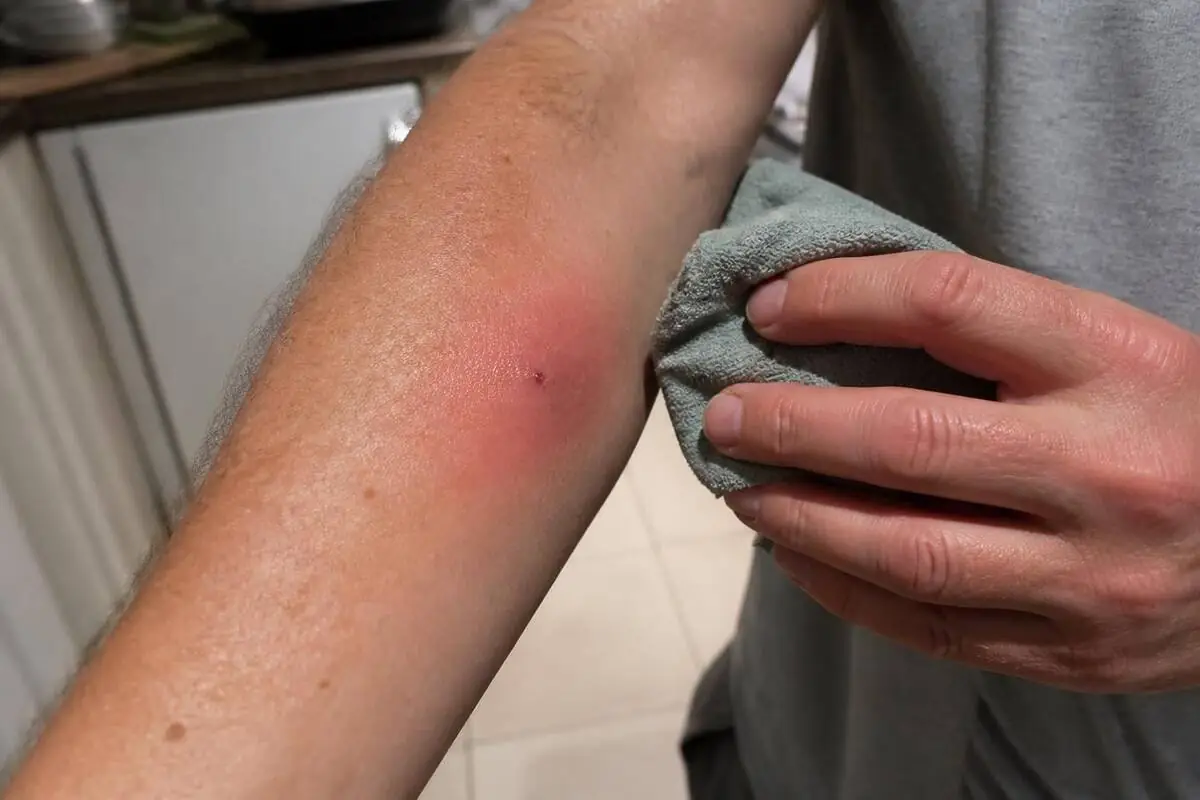
Most wasp, hornet, and bee stings are painful but not dangerous. For the vast majority of people, a sting causes a sharp burning sensation, some localised swelling and redness, and subsides within a few hours. But for a small number of people, a sting can trigger a severe allergic reaction that becomes a life-threatening emergency within minutes.
Step-by-step: what to do immediately after a sting
- Move away from the area. Do not swat at the wasp or hornet. If you are near a nest, walk steadily away from it.
- Check whether a stinger is embedded. Wasps and hornets rarely leave a stinger behind. If you can see one (typically from a honeybee), scrape it out sideways using a fingernail or the edge of a bank card. Do not use tweezers or squeeze — this pushes more venom into the skin.
- Wash the area with soap and water. Clean the sting site thoroughly and pat dry gently.
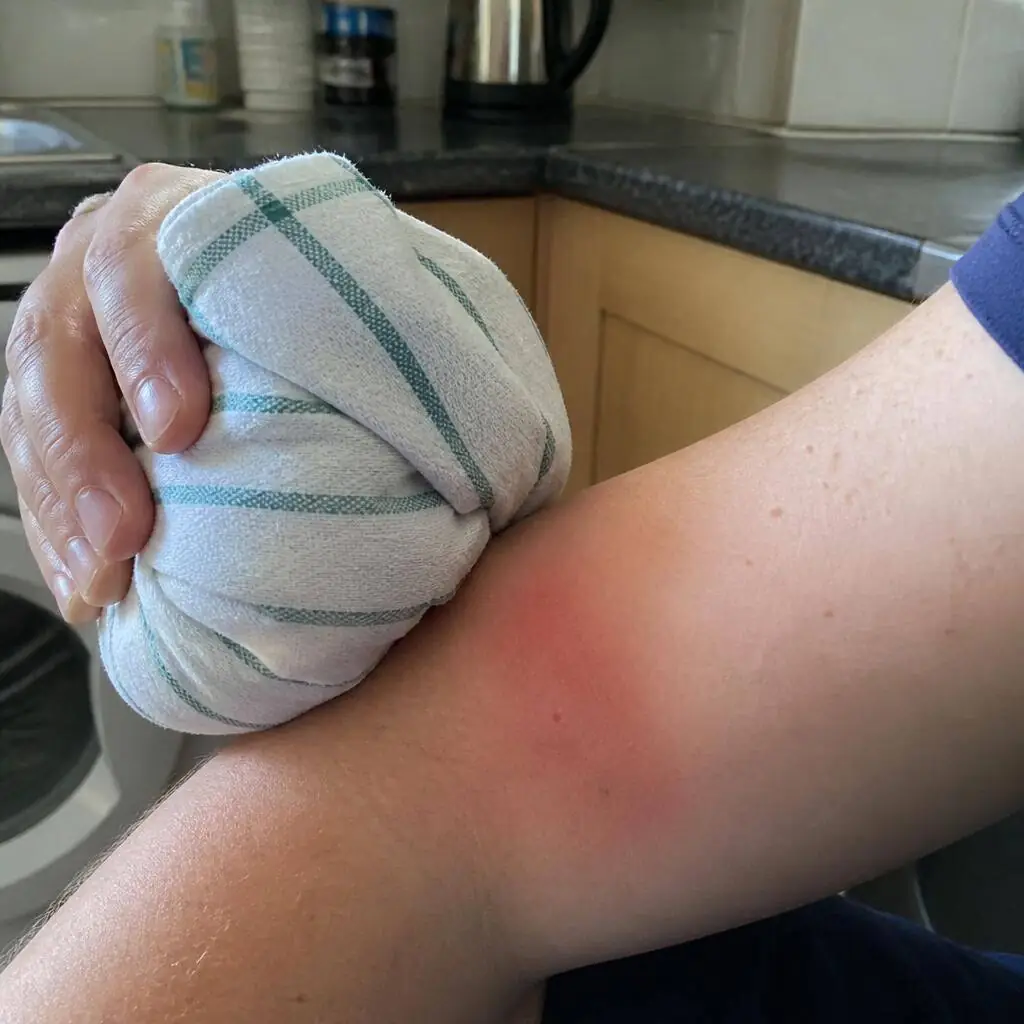
- Apply a cool compress. Run the affected area under cool water for 10 minutes, or apply a cold flannel. NHS guidance no longer recommends ice directly on the skin.
- Take a painkiller if needed. Ibuprofen or paracetamol at the standard dose. Ibuprofen has mild anti-inflammatory properties making it slightly preferable for sting pain.
- Take an antihistamine. Cetirizine or loratadine helps control itching, local swelling, and minor allergic response. Antihistamine cream applied to the sting site can also help.
Symptoms for a normal sting should be significantly reduced within a few hours and largely resolved within 24-48 hours.
Normal reaction, allergic reaction, and anaphylaxis
The most important skill in sting management is knowing when a reaction has moved beyond the normal and is becoming dangerous. The three categories are clearly distinct.
| Reaction type | Symptoms | What to do |
|---|---|---|
| Normal local reaction | Sharp pain, redness and swelling at the sting site, mild warmth. Swelling typically up to 5cm diameter. Subsides within hours. | Follow the step-by-step guide above. Monitor for 30 minutes. |
| Large local reaction | Swelling extending significantly beyond the sting site — sometimes the whole limb. Persists for 2-7 days. No symptoms elsewhere. | Follow first aid steps. Take oral antihistamine. See GP if swelling is severe, expanding rapidly, or near the face or throat. |
| Mild allergic reaction | Itching, hives or rash spreading beyond the sting site, mild nausea or stomach cramps, mild anxiety. | Take oral antihistamine immediately. Sit or lie down. Call 111. Monitor closely — can progress to severe reaction. |
| Severe allergic reaction / anaphylaxis | Difficulty breathing or wheezing, throat or mouth swelling, pale or bluish skin, rapid weak pulse, dizziness or collapse. May occur within 2-15 minutes. | CALL 999 IMMEDIATELY. Use an EpiPen if available. Lay the person flat with legs raised (or sitting up if breathing difficulty). Stay with them. |
Signs of anaphylaxis — emergency reference
Any combination of the following after a sting requires an immediate 999 call:
- Sudden difficulty breathing, wheezing, or noisy breathing
- Swelling of the lips, tongue, throat, or face
- Skin that is pale, grey, or has a bluish tinge
- A sudden drop in blood pressure causing dizziness or collapse
- A rapid but weak pulse
- Nausea, vomiting, or severe stomach cramping alongside other symptoms
- Loss of consciousness or unresponsiveness
- A sense of impending doom (this is a recognised clinical sign)
About EpiPens (adrenaline auto-injectors)
An EpiPen is a pre-loaded syringe containing a single dose of adrenaline, designed for emergency use by non-medical people. It is the primary treatment for anaphylaxis while waiting for emergency services.
Who should carry one?
If you have previously had a severe allergic reaction to a wasp, hornet, or bee sting, your GP or allergist will typically prescribe two EpiPens to carry at all times — the first dose may not be sufficient.
How to use one
EpiPens can be used through clothing. Remove the blue safety cap, press the orange tip firmly against the outer thigh, hold for ten seconds, remove and massage the area gently. Call 999 immediately if you have not already.
Wasp sting vs bee sting vs hornet sting
| Type | What to know |
|---|---|
| Wasp & hornet sting | Alkaline venom. No stinger left behind — wasps can sting multiple times. Hornets deliver more venom per sting due to their larger size. |
| Honeybee sting | Acidic venom. The stinger is barbed and detaches from the bee, continuing to pump venom for up to a minute. Remove by scraping sideways. |
| Bumblebee sting | Like wasps, bumblebees can sting repeatedly. Stings are generally less painful and severe reactions are less common. |
| Multiple stings | Being stung 50+ times can cause systemic toxic reactions even in people without sting allergies. Seek medical advice after any mass stinging incident. |
Can you become more sensitive over time?
Yes. Repeated stings, even without a severe reaction, can cause your immune system to develop stronger antibodies against wasp venom. If your reactions to stings have been getting progressively more severe, mention this to your GP. You may be a candidate for venom immunotherapy (desensitisation therapy), which can significantly reduce the severity of future reactions.
Protecting children after a sting
Children are not more likely than adults to have an anaphylactic reaction, but the smaller body mass of a child means venom effects can be proportionally stronger. Watch carefully for widespread hives, difficulty swallowing, pale colour, drowsiness — and call 999 if any of these appear. Do not give aspirin to children under 16.