
Garden Nests
Wasp Nest in the Garden Ground, Decking, Hedge & Tree
From a hole in the lawn to a football-sized aerial nest in the hedge, garden nests are some of the most dangerous because you cannot avoid the space. Do not mow, do not strim, do not water the hole. Call us on 01727 789571.
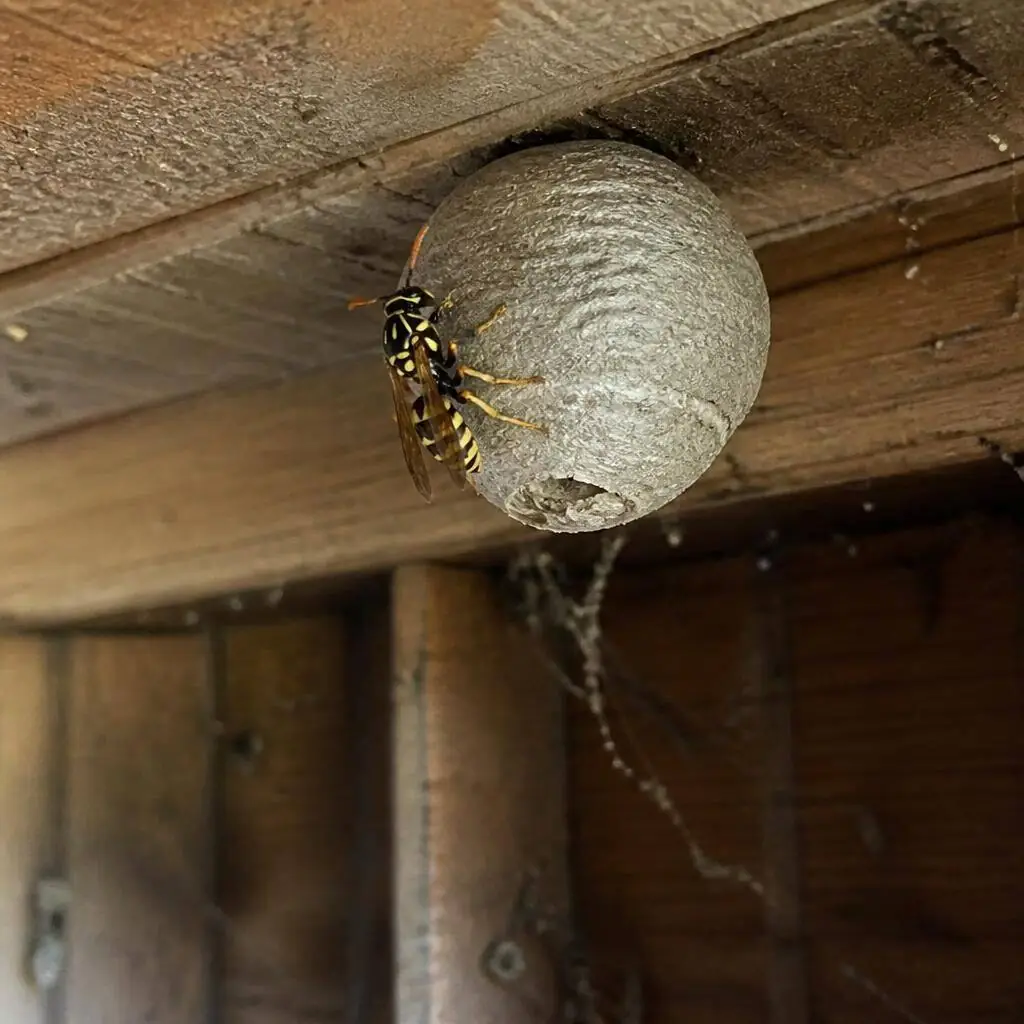
The four common garden nest types
| Type | What it looks like |
|---|---|
| Underground / ground nest | A single hole in lawn, border, bank, or under a hedge with a steady stream of wasps. Often no visible nest material — the nest is below ground. |
| Under decking or patio | Wasps entering and exiting a gap at the edge of decking or under the lip of a paving slab. The nest is in the void below. |
| Hedge nest | Football-sized grey paper nest visible inside a dense hedge — typically privet, conifer or beech. Often only discovered when trimming the hedge. |
| Tree nest | Aerial grey papery nest attached to a tree branch or built in a tree cavity. More common in mature gardens with established trees. |
Underground / ground nests — most common in larger gardens
Under-decking nests
The void under decking is the perfect nest cavity: ventilated, sheltered, predator-free and large. We treat dozens every season across Hertfordshire. Treatment is at the edge of the decking where wasps enter; boards never need to be lifted. The colony is rendered inactive within 2-4 hours.
Hedge and tree nests
Aerial nests in hedges and trees are visually obvious once spotted — a grey, papery, often football-sized structure with a single visible opening. The risk is that hedge nests are often only discovered mid-trim by someone with shears, which is too late to back off safely. If you see one, stop work and call us.
What NOT to do
| Do NOT | Why |
|---|---|
| Mow or strim near a ground nest | Vibration is the strongest trigger for a defence response from a ground colony. Multiple stings are likely within seconds. |
| Pour boiling water down the hole | Does not reach the nest cavity. Provokes immediate mass defence from every available exit. |
| Block the entry hole during the day | Foraging wasps return and cannot get in. They become aggressive at the entry point and will sting anyone nearby. |
| Try to dig up a ground nest | Even fully suited beekeepers do not dig out live wasp colonies. The nest is connected to a network of soil tunnels and the response is immediate and massive. |
| Burn or smoke a hedge nest | Hedges are dry. Fires are not controllable. This causes hedge fires every summer in the UK. |
| Spray bug killer at an exposed hedge or tree nest | Provokes immediate mass attack from a colony that may number several thousand wasps. Multiple stings within seconds. Do not try. |
How we treat garden nests
All four garden nest types are treated using the same principle: insecticide powder applied at the entry point of the nest, from a safe distance, at the right time of day for the nest type. The colony is rendered inactive within 2-4 hours in almost every case. We never use sprays for exposed nests — powder is safer and more effective.
Related guides
- Wasp nest in a shed or outbuilding
- Signs of a wasp nest
- Prevention guide
- Wasp nest removal cost
- Hertfordshire coverage areas