
from £99
Wasp Nest Removal & Treatment — Letchworth Garden City
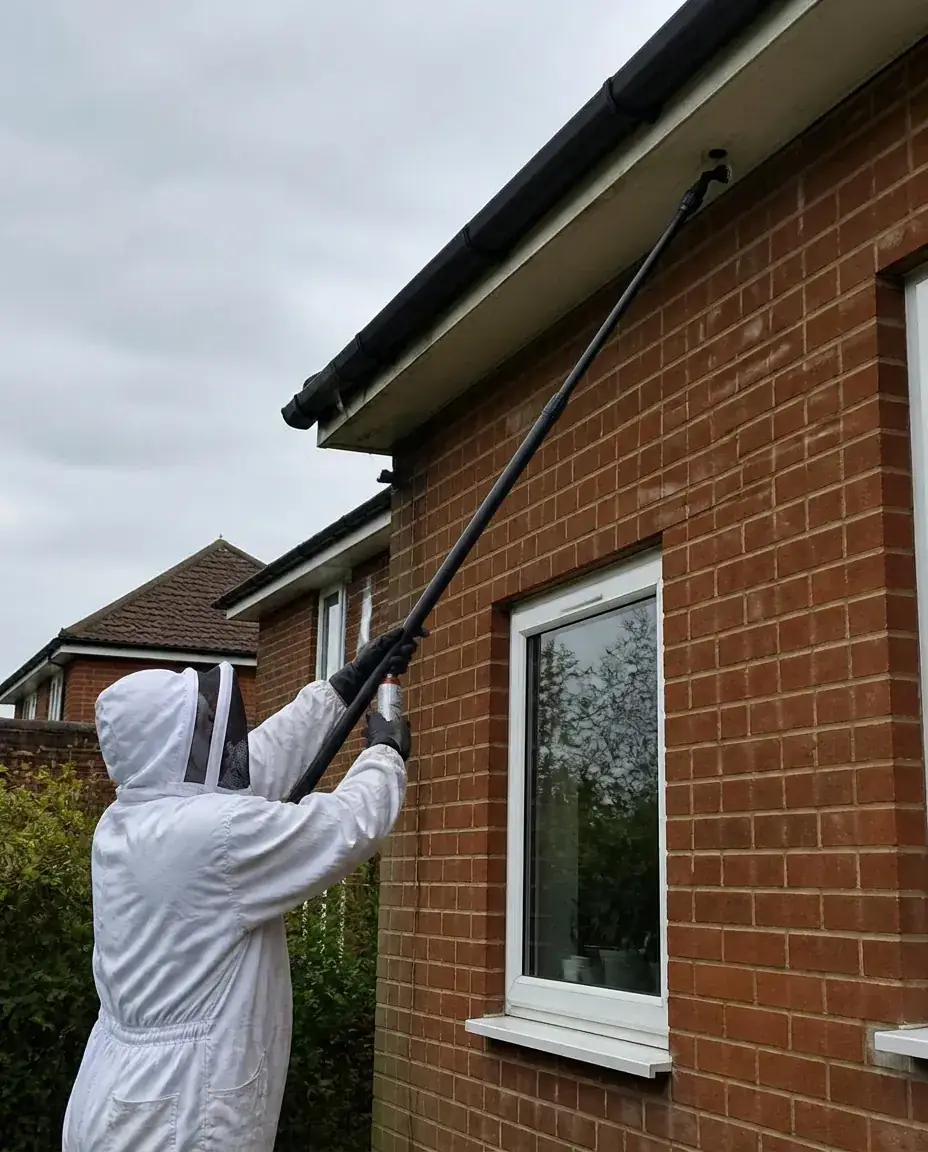
Insecticide powder goes in at the entry point and the colony is usually inactive within 2–3 hours. Same day across SG6.
Letchworth Garden City · SG6
Local wasp and hornet pest control across SG6. Family-run, based in St Albans AL3, reaching Letchworth Garden City in approximately 50-65 minutes. Fixed price from £99, fully licensed, free revisit guarantee. Call 01727 789571 — same day WhatsApp for a fast quoteFreephone 0800 046 3473Lines open 8am–9pm, 7 days a week · No call-out charge · Free revisit guarantee

Verified Google reviews
Live customer feedback, updated automatically as new reviews come in.
Seen a nest? Same-day treatment, price confirmed on the phone.
01 — Our Services
Wasps and hornets are all we deal with.
Insecticide powder goes in at the entry point and the colony is usually inactive within 2–3 hours. Same day across SG6.
European hornet nests, same method and same price. Not sure which you have? Describe it on the phone.
Call 01727 789571. From St Albans we typically reach the original Garden City core and Jackmans Estate in 50-60 minutes. Norton and Willian in 55-65 minutes.
Shops, offices, schools, care homes and rented property, treated discreetly.
We don't treat honey bees. Swarms are passed to a local beekeeper.
Deep roof voids, cavity walls and listed buildings, with no invasive work.
Letchworth is unique in British urban history — the world's first Garden City, founded in 1903 to designs by Parker and Unwin. The original Arts and Crafts housing, with its roughcast render, red clay pantile roofs, gables and dormer windows, is now over 100 years old and the most distinctive in our service area. We treat these properties with the care their conservation status demands.
Not sure it's a nest? Check the signs of a wasp nest. Thinking of a DIY wasp nest removal? Read what happens if you leave a wasp nest and our wasp nest in the roof guide first.
02 — Local Knowledge
Norton Common — a large area of rough grassland and scrub adjacent to residential streets — creates exceptionally high queen density across the north of the town, consistent with the Oughtonhead and Chorleywood Common effects we see elsewhere. The Jackmans Estate (1960s-70s Radburn layout) and more recent infill housing produce additional, very different scenarios alongside the original stock.
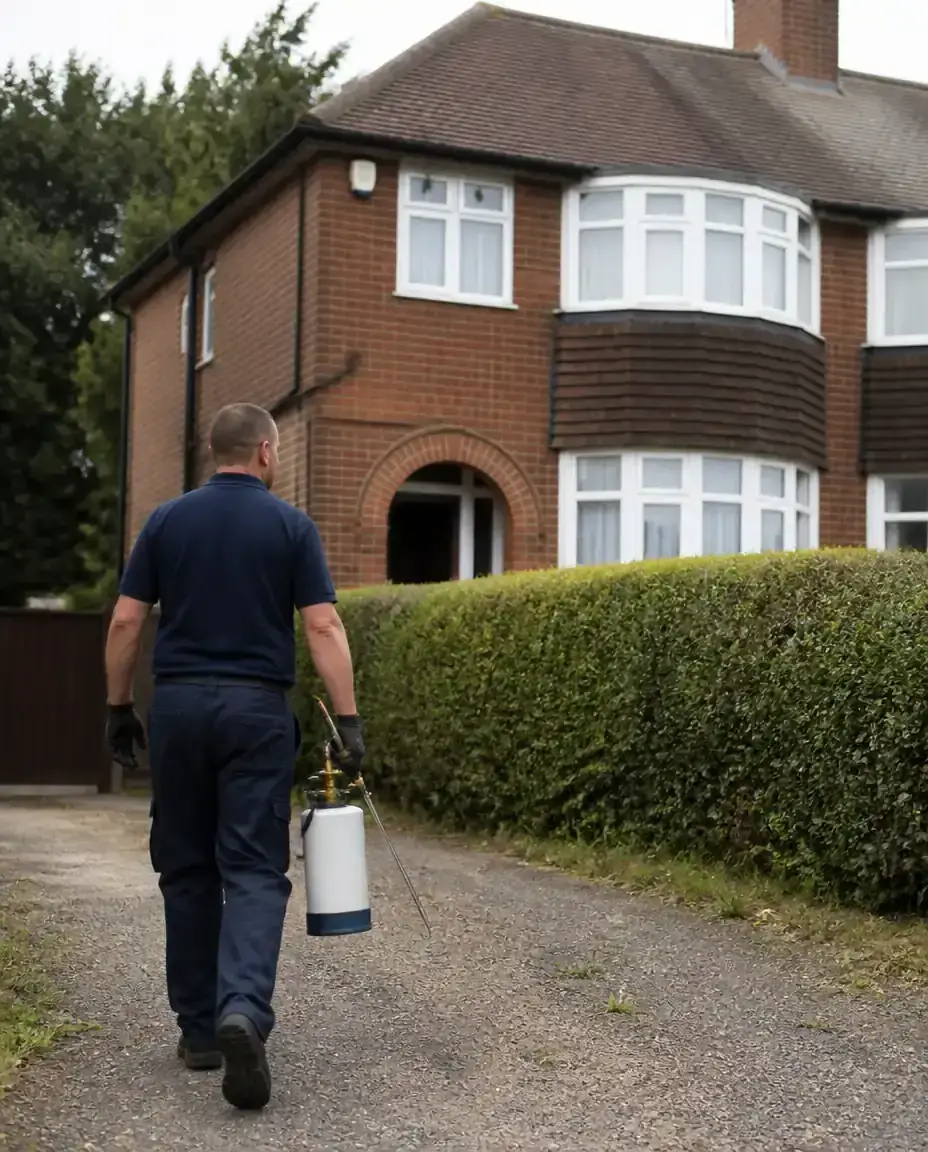
The original Parker and Unwin housing on Letchworth Lane, Norton Way, Birds Hill and the avenues radiating from the town centre is now a designated Conservation Area. Clay pantile roofs create gaps between overlapping tiles that are used as nest entry points alongside the standard fascia and mortar gaps. We treat externally, at the entry gap — no tiles need to be lifted and no work is carried out on the listed fabric.
The 1960s-70s Jackmans Estate has the construction profile of its era — standard soffit voids, wall cavity gaps and the flat-to-pitched roof junctions typical of late-20th-century residential construction. Properties on the estate generate regular soffit and wall-cavity nest call-outs and the 50-year-old planting now produces consistent garden nests too.
Norton village on the northern edge of Letchworth has older pre-Garden-City character with some genuinely historic buildings. Norton Common drives the highest ground nest frequency in SG6. Willian, a separate historic village to the south-east, contributes its own character properties and large garden plots.
03 — Where We Find Them
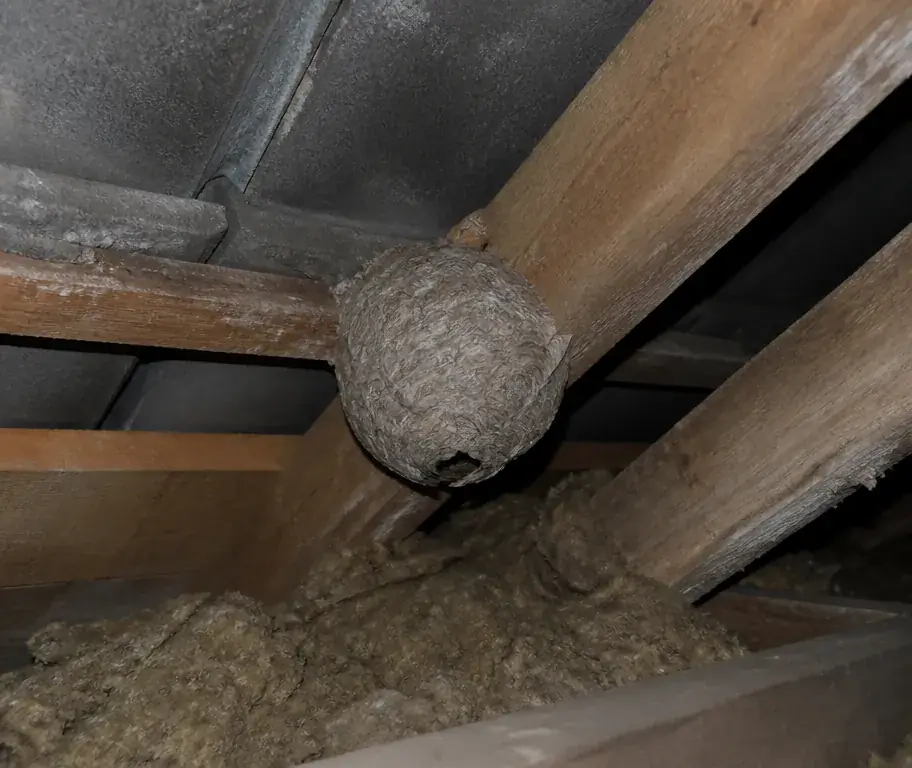
The nests we see most often in Letchworth Garden City:
| Nest location | What we find in Letchworth Garden City — and where |
|---|---|
| Clay pantile roofs | Specific to original Garden City Arts and Crafts housing. Gaps between overlapping clay pantiles are used as entry points alongside fascia gaps — unique to Letchworth in our service area. |
| Loft / roof void | All property types — original Garden City houses have large, largely undisturbed roof voids. |
| Underground in gardens | Above average throughout the original Garden City area thanks to large, well-planted gardens. Norton Common fringe properties highest of all. |
| Outbuildings and converted stables | Several original Garden City properties have original stable blocks, coach houses or garden buildings producing nest call-outs. |
| Ivy and wall planting | Common on original Garden City houses where climbing plants on roughcast render are characteristic of the architectural style. |
| Soffits — Jackmans Estate | Characteristic of 1960s-70s Jackmans Estate construction. |
| Garden sheds | All areas — large garden plots throughout the original Garden City area particularly prone. |
Yours not here? Call and describe it.
Unique to Letchworth in our coverage area. Entry between pantiles is treated externally from a safe ladder position — no tiles disturbed and nothing carried out on the listed fabric.
Annual scenario for properties on the common edge. We treat the entry hole at dusk with insecticide powder — never block the entrance or pour anything into it.
Often only spotted from the flight path while gardening.
Wasps at light fittings or the loft hatch mean a nest directly above. Don't spray indoors; it's treated at source.
Treated from outside at the roofline gap. Nothing needs clearing from the loft.
Powder goes in at the tile gap from outside. No tiles lifted.
04 — Pricing
No call-out charge and no extras for awkward access. The price you're quoted on the phone is the price you pay.
05 — How It Works
We check the species, fix the price and book the earliest slot, usually the same day in Letchworth Garden City.
We find the entry point by watching the flight path.
Insecticide at the entry point, from outside in almost every case.
Usually inactive within 2–3 hours.
We tell you what activity to expect over the next day or so.
If your Letchworth Garden City nest needs a second treatment, it's free.
06 — Why Choose Us
07 — Coverage
Every street, neighbourhood and village in SG6 is within our daily service zone:
08 — When to Act
| Period | What is happening in Letchworth Garden City |
|---|---|
| Apr — May | Queens pick nest sites. Most sightings now are bumblebees or mortar bees, not wasps. |
| June | Colonies are small. The quickest and easiest time to treat. |
| July — August | Peak season, with thousands of workers in a big nest. Ring in the morning for a same-day visit. |
| September | The colony breaks down and workers turn aggressive. Most stings happen now. |
| Oct — Nov | The nest dies off. Seal the entry gap so it isn't reused next spring. |
Busiest spot in Letchworth Garden City: Norton Common edge and the original Garden City clay pantile roofs.
Month-by-month detail is in our Wasp Life Cycle page.
08b — Availability
| When | Availability across Letchworth Garden City |
|---|---|
| Phone lines | 8am–9pm, 7 days a week. |
| Appointments | Monday to Saturday, 8am until dusk. Ring in the morning for a same-day visit; evenings on request. |
| Sundays & bank holidays | Limited, mainly in peak season (June to September). Ask when you call. |
08c — Wasps or Bees?
Many spring calls from Letchworth Garden City turn out to be bees. Our wasp, hornet & bee species guide has photos to compare. We never treat honey bees; swarms go to a local beekeeper.
09 — FAQs
10 — Nearby Areas
Closer to one of these? Each has its own local page.
See our full Coverage Areas page for every town we cover.
Call and speak to a real person in Hertfordshire. Guaranteed price at the time of booking. Same-day service in most postcodes.