
from £99
Wasp Nest Removal & Treatment — Ware
Insecticide powder goes in at the entry point and the colony is usually inactive within 2–3 hours. Same day across SG12.
Ware · SG12
Local wasp and hornet pest control across SG12. Family-run, based in St Albans AL3, reaching Ware in approximately 45-55 minutes. Fixed price from £99, fully licensed, free revisit guarantee. Call 01992 827092 — same day WhatsApp for a fast quoteFreephone 0800 046 3473Lines open 8am–9pm, 7 days a week · No call-out charge · Free revisit guarantee

Verified Google reviews
Live customer feedback, updated automatically as new reviews come in.
Seen a nest? Same-day treatment, price confirmed on the phone.
01 — Our Services
Wasps and hornets are all we deal with.
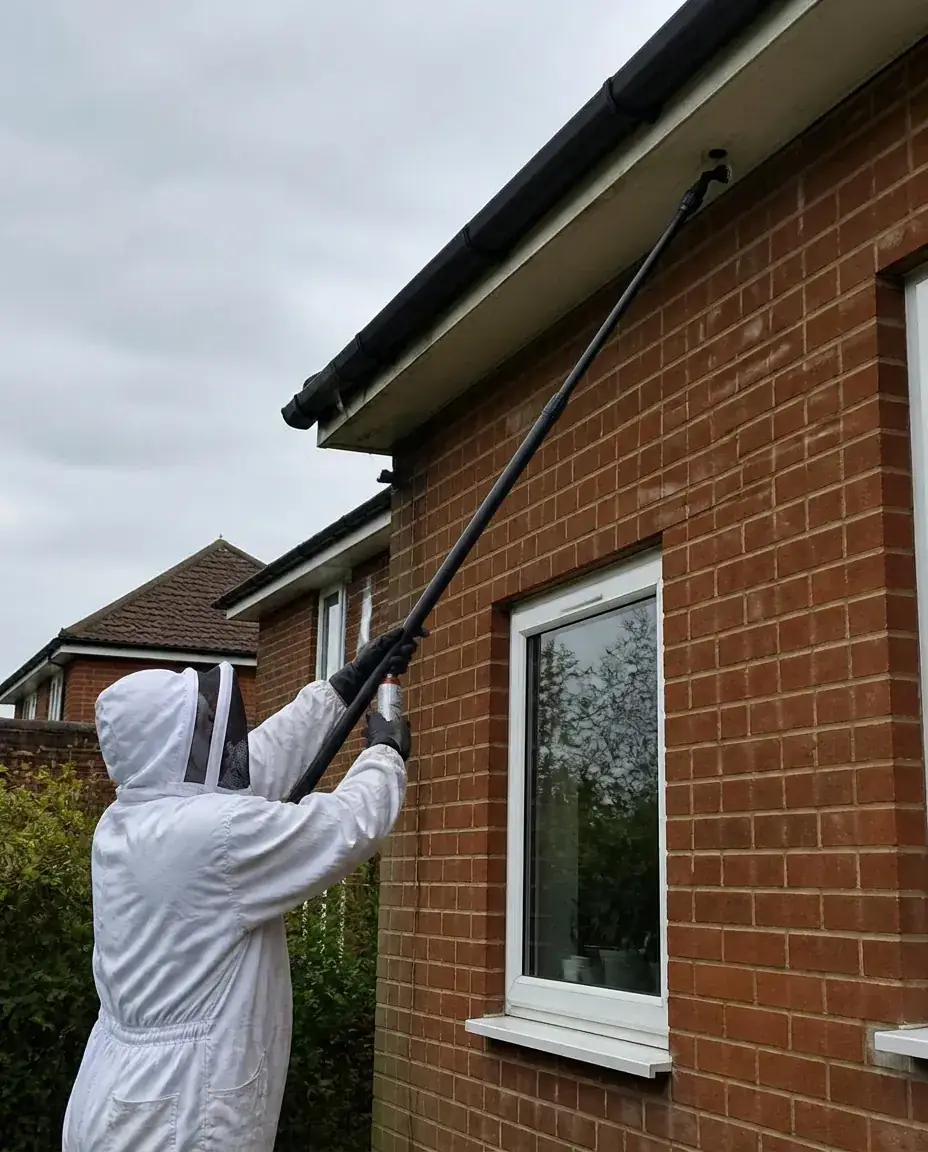
Insecticide powder goes in at the entry point and the colony is usually inactive within 2–3 hours. Same day across SG12.
European hornet nests, same method and same price. Not sure which you have? Describe it on the phone.
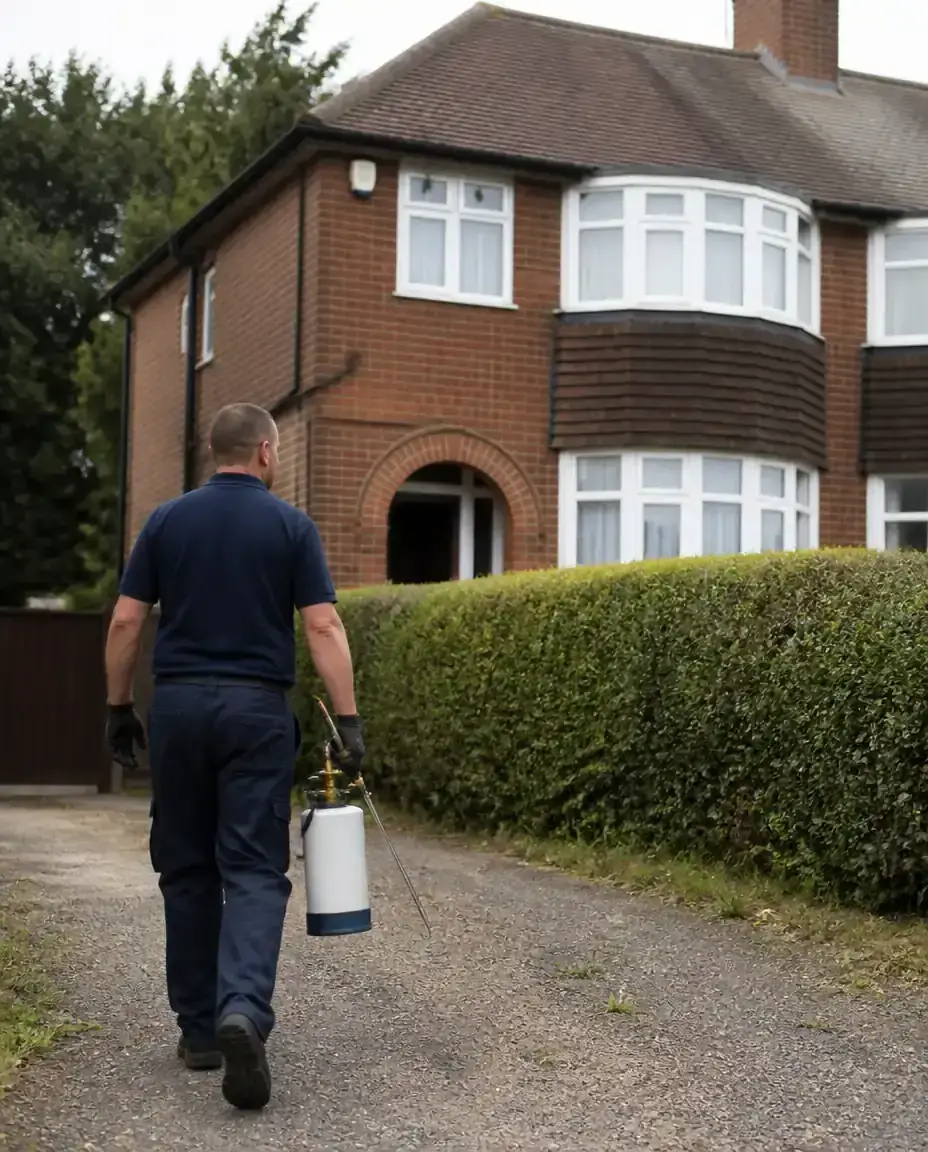
Call 01992 827092. From St Albans we typically reach Ware town centre in 45-50 minutes and Chadwell, Kingsmills and the Stanstead Abbotts fringe in 50-55 minutes.
Shops, offices, schools, care homes and rented property, treated discreetly.
We don't treat honey bees. Swarms are passed to a local beekeeper.
Deep roof voids, cavity walls and listed buildings, with no invasive work.
Ware is a historic market town on the River Lea with genuine medieval heritage. Its maltings industry once gave it national significance, and the converted Victorian maltings on Priory Street now form some of the most distinctive riverside apartments in Hertfordshire. Behind the commercial frontage, Victorian semis and terraces fill the residential streets near the station — classic Victorian roofline nest territory.
Not sure it's a nest? Check the signs of a wasp nest. Thinking of a DIY wasp nest removal? Read what happens if you leave a wasp nest and our wasp nest in the roof guide first.
02 — Local Knowledge
The New River begins at Ware — running 40 miles south to London — and the River Lea runs alongside the town, creating a double-waterway ecology that significantly influences local wasp patterns. Ground nests in Chadwell and Kingsmills gardens are well above the regional average as a direct result.
A remarkable collection of Victorian bay-fronted semis and terraces sits alongside genuine Georgian cottages behind the High Street. The converted Priory Street maltings now contain riverside apartments that produce their own specific scenarios — gaps in original brick, gaps around converted roof lights, and garden areas adjacent to the River Lea bank.
South Ware sits on the chalk plateau above the river town. Hoe Lane, Widbury Hill and the streets running south from the station have standard 1930s and post-war soffit and fascia nest profiles. The Kingsmills development, backing onto the New River, sees above-average ground nest frequency.
Chadwell — the eastern district directly adjacent to the start of the New River — sees above-average wasp nest frequency thanks to water meadow and riverside ecology around the historically significant New River Head. Victorian semis and terraces in the Christchurch area generate standard roofline nest scenarios.
03 — Where We Find Them
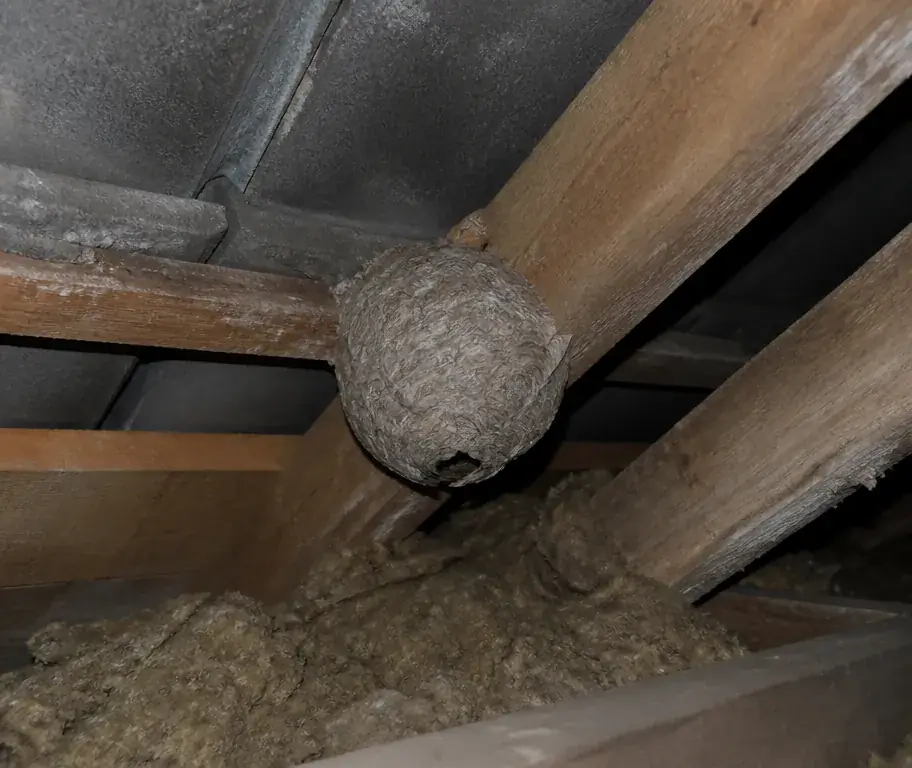
The nests we see most often in Ware:
| Nest location | What we find in Ware — and where |
|---|---|
| Underground — New River and Lea | The most distinctive nest type for Ware. Ground nests in Chadwell and riverside South Ware properties driven by the triple-waterway ecology. |
| Loft / roof void | Victorian and Edwardian town centre properties. Common throughout SG12. |
| Chimneys | Victorian town centre terraces and semis — some Georgian town centre properties. |
| Maltings conversions | Gaps in original brick and around converted roof lights — unusual but handled by us. |
| Wall cavities and soffits | 1930s-50s South Ware housing. |
| Under decking — riverside | Very common in Kingsmills and Chadwell riverside properties where decking over the waterway bank is prevalent. |
| Garden sheds | All residential areas. |
Yours not here? Call and describe it.
Unusual access scenarios in original Victorian brick — assessed individually and treated non-invasively at the existing entry gap.
Annual scenario — exceptionally rich riverside habitat. Treated at the entry hole at dusk.
Standard Victorian roofline scenario — treated externally at the fascia or chimney entry.
Wasps at light fittings or the loft hatch mean a nest directly above. Don't spray indoors; it's treated at source.
Treated from outside at the roofline gap. Nothing needs clearing from the loft.
Powder goes in at the tile gap from outside. No tiles lifted.
04 — Pricing
No call-out charge and no extras for awkward access. The price you're quoted on the phone is the price you pay.
05 — How It Works
We check the species, fix the price and book the earliest slot, usually the same day in Ware.
We find the entry point by watching the flight path.
Insecticide at the entry point, from outside in almost every case.
Usually inactive within 2–3 hours.
We tell you what activity to expect over the next day or so.
If your Ware nest needs a second treatment, it's free.
06 — Why Choose Us
07 — Coverage
Every street, neighbourhood and village in SG12 is within our daily service zone:
08 — When to Act
| Period | What is happening in Ware |
|---|---|
| Apr — May | Queens pick nest sites. Most sightings now are bumblebees or mortar bees, not wasps. |
| June | Colonies are small. The quickest and easiest time to treat. |
| July — August | Peak season, with thousands of workers in a big nest. Ring in the morning for a same-day visit. |
| September | The colony breaks down and workers turn aggressive. Most stings happen now. |
| Oct — Nov | The nest dies off. Seal the entry gap so it isn't reused next spring. |
Busiest spot in Ware: New River Head at Chadwell — exceptional riverside ground nest pressure.
Month-by-month detail is in our Wasp Life Cycle page.
08b — Availability
| When | Availability across Ware |
|---|---|
| Phone lines | 8am–9pm, 7 days a week. |
| Appointments | Monday to Saturday, 8am until dusk. Ring in the morning for a same-day visit; evenings on request. |
| Sundays & bank holidays | Limited, mainly in peak season (June to September). Ask when you call. |
08c — Wasps or Bees?
Many spring calls from Ware turn out to be bees. Our wasp, hornet & bee species guide has photos to compare. We never treat honey bees; swarms go to a local beekeeper.
09 — FAQs
10 — Nearby Areas
Closer to one of these? Each has its own local page.
See our full Coverage Areas page for every town we cover.
Call and speak to a real person in Hertfordshire. Guaranteed price at the time of booking. Same-day service in most postcodes.